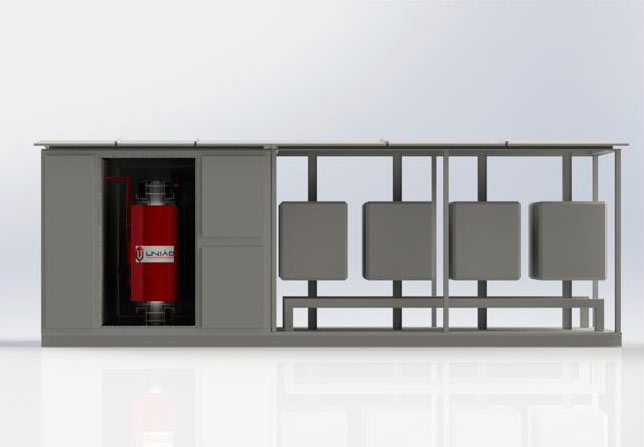
What is a skid for a solar power plant?
The generation of energy through solar panels has grown rapidly. Brazil, for example, already has 15 GW of installed capacity, combining large-scale power plants and its own generation system
An essential component in solar power plant projects photovoltaic It's the skid. Do you know the functionality of this item? Follow the content and learn all about it!
To explain the importance of the skid, it's important to understand how the photovoltaic system works.
Check out the steps below:
Solar panels capture radiation and generate power in direct voltage/current.
2. The direct current is transferred to the solar inverter. From there, it changes from direct to alternating current.
3rd After passing through the inverter, the current is taken to a transformer, with the objective of adapting the voltage to the needs of the grid or consumer.
Solar farm skids refer to modular, prefabricated mounting structures used to support solar panels. They are designed to be easily transported, assembled, and installed at a solar power plant site. These skids typically consist of a frame or rack system made of metal, often aluminum or galvanized steel, that holds the solar panels at a specific tilt angle to optimize sunlight capture. Here are some key aspects of solar farm skids: * **Modularity and Prefabrication:** Skids are built in factories as complete units, reducing on-site labor and construction time. This modularity allows for efficient scaling of solar farms. * **Ease of Transportation and Installation:** Their design facilitates shipping and quick assembly at the project site. They can often be transported by truck and lifted into place by cranes or other heavy equipment. * **Structural Support:** The primary function of a skid is to provide a stable and secure base for solar panels, protecting them from wind, snow, and other environmental factors. * **Optimized Angle:** Skids are engineered to hold the solar panels at an optimal angle (tilt) to maximize the amount of solar radiation they receive throughout the year. This angle can be fixed or adjustable (for tracking systems). * **Ground Mounting:** In most cases, skids are used for ground-mounted solar arrays, as opposed to rooftop installations. They are anchored to the ground using foundations, concrete blocks, or driven piles. * **Types of Skids:** While the basic concept is the same, there can be variations in skid design depending on the terrain, site conditions, and the specific type of solar panels being used. Some might be designed for flat ground, while others can accommodate slopes. * **Cost-Effectiveness:** By streamlining the installation process, skids can contribute to reducing the overall cost of building a solar farm. In essence, solar farm skids are a critical component in the construction of large-scale solar power generation facilities, enabling efficient and reliable installation of solar panels.
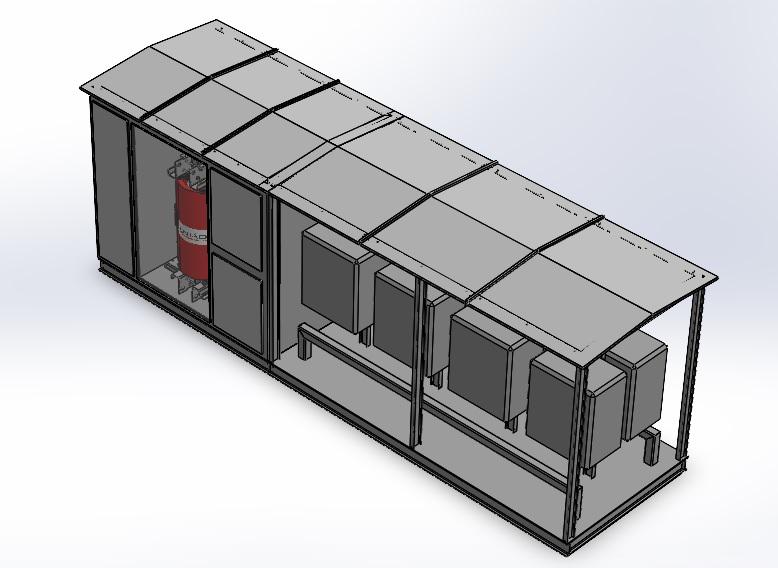
As previously stated, the skid is a component intended for photovoltaic power plants. It houses equipment such as inverters, transformers, and high-voltage (HV) and low-voltage (LV) protection devices in a compact and independent manner. These components are responsible for converting direct current to alternating current and adjusting the received voltage to the ideal level.
This equipment is compact, offers security, and is easily transportable.
Want to learn more about solar power plants and energy transformation? Talk to our consultants and find the equipment and services that meet your company's needs!

 Português do Brasil
  English
  Español