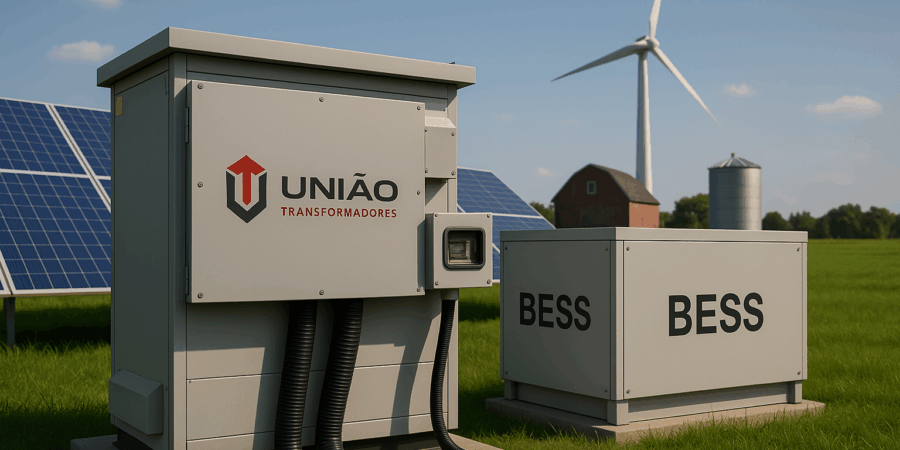
Transformers Integrated into BESS Systems on Off-Grid Farms
Integrated Medium-Voltage Dry-Type Transformers in BESS for Isolated Farms
Reliable electricity supply is one of the great challenges faced
by farms located in regions far from urban centers. The expansion of
Brazilian agribusiness requires solutions that combine efficiency, security, and
sustainability, ensuring the continuous operation of essential systems such as
irrigation, cooling, mechanized milking, and lighting. In this context, the
medium-voltage dry-type transformers combined with storage systems
Energy storage in batteries (BESS) represent a cutting-edge technological alternative.
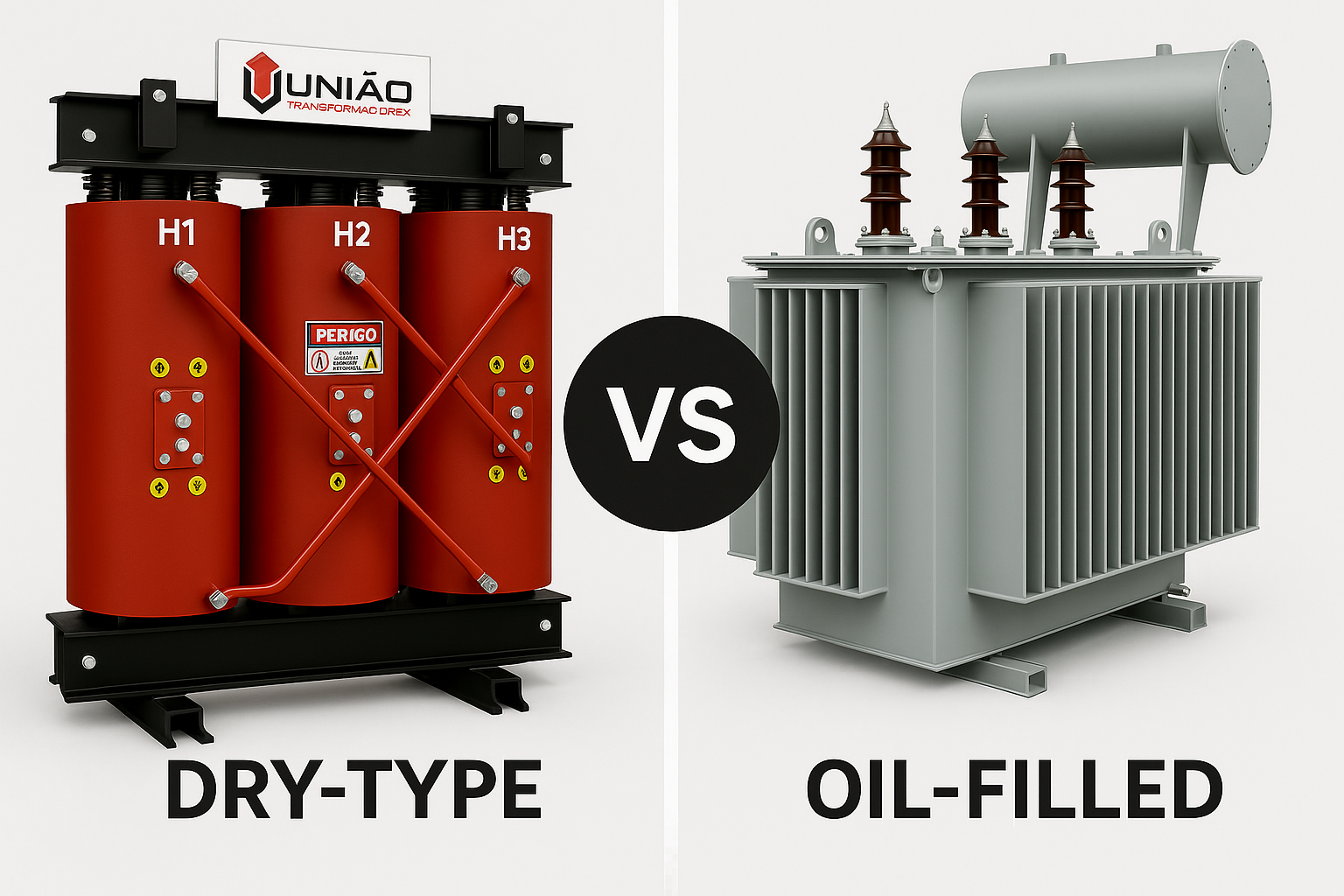
Unlike oil-filled transformers, dry-type transformers stand out
for enhanced safety, absence of leakage risk, lower need for
maintenance and greater resistance to rural environments, which often present
dust and humidity. Furthermore, its efficient operation ensures lower losses
electrical, which translates into savings and quality in energy supply. These
characteristics make the dry transformer the ideal choice for properties
agricultural operations that require constant reliability and cannot afford risks
environmental.
The role of BESS is complementary: it enables surplus energy,
generally sourced from renewables like solar and wind, be stored
for use during low generation periods. With this, the farm gains autonomy
energy, reducing its dependence on diesel generators and, consequently,
reducing costs and carbon emissions. In addition to ensuring a stable supply, the
BESS improves the quality of power delivered to equipment, avoiding
voltage fluctuations that could compromise productivity.
The integration between the dry transformer and the BESS occurs harmoniously.
battery system is connected by means of bidirectional inverters, while the
medium voltage transformer makes the necessary adjustment for distribution
safe power to the various loads of the property. In the case of farms
completely isolated, this configuration works as a rural microgrid, ensuring
continuous energy, even without a connection to the utility grid.
The benefits of this integration go beyond the electrical operation. From the point of view
economical, the rural producer gains greater cost predictability and reduces their
reliance on fossil fuels. Environmentally, it avoids contamination risks
associated with the use of insulating oil and aligns its production with sustainable practices
required by market regulations and ESG standards. Furthermore, the modernization of
energy infrastructure enhances property value, transforming it into a benchmark for
Innovation in the field.
In summary, the use of medium-voltage dry-type transformers combined
com sistemas BESS offers isolated farms a robust, efficient, and
sustainable. It is a strategic path to ensure energy security,
preserve the environment and strengthen the competitiveness of Brazilian agribusiness
in the face of future challenges.
 Português do Brasil
  English
  Español