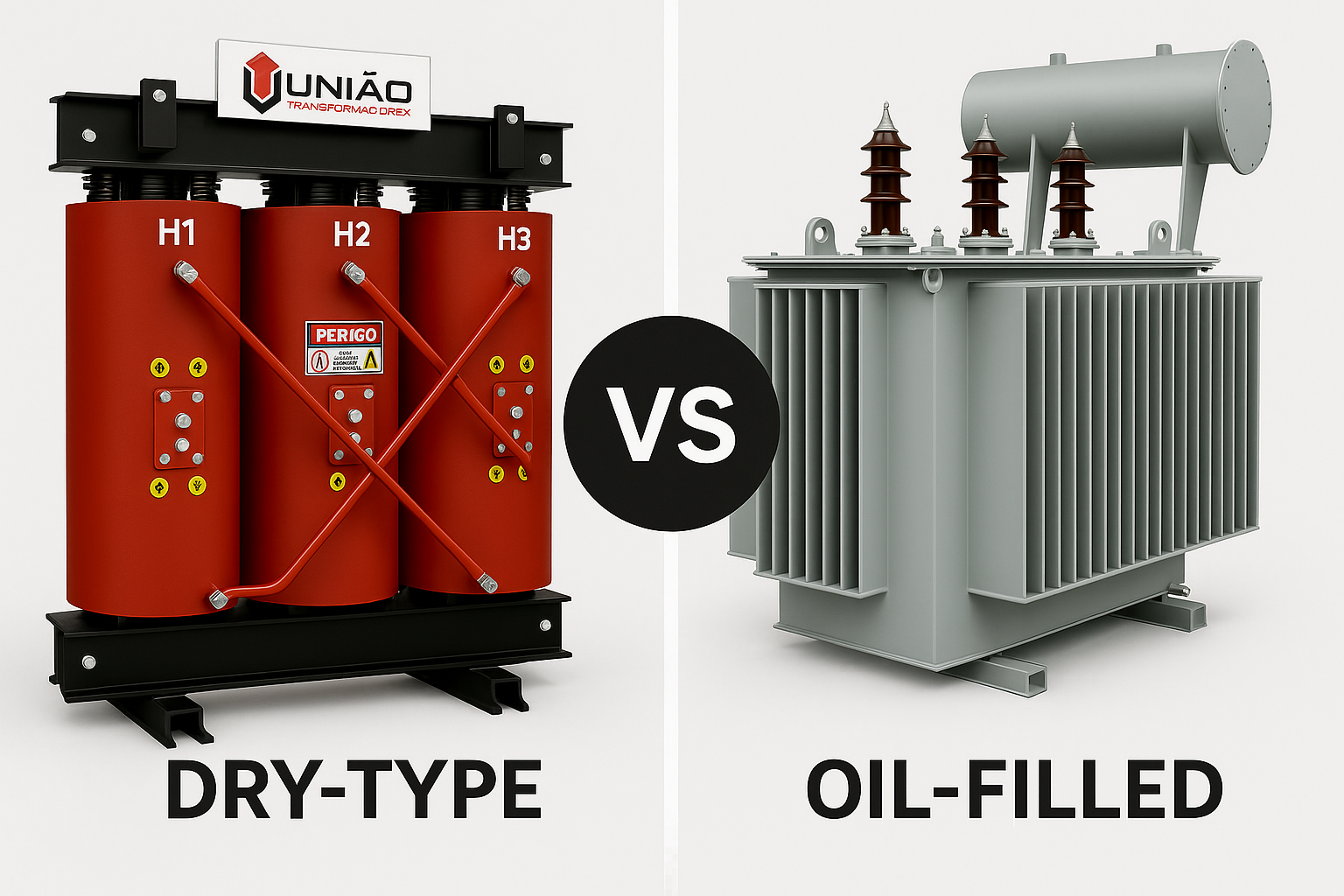
Dry-Type Transformers vs. Oil-Filled Transformers: Which Is the Best Choice for Safety, Efficiency, and Sustainability?
Did you know that the choice between a dry-type transformer and one oil transformer can directly impact the electrical safety, the operating costs and even the environmental sustainability of your installation?
Increasingly, companies in critical sectors — such as hospitals, industries, data centers, and renewable energy projects — are migrating to dry transformers. And the reasons go far beyond technology: they involve risk reduction, energy savings, and fast financial return (payback).
In this article, we will show in detail:
- Differences between dry-type and oil-filled transformers;
- The technical, environmental, and economic advantages of the dry-type transformer;
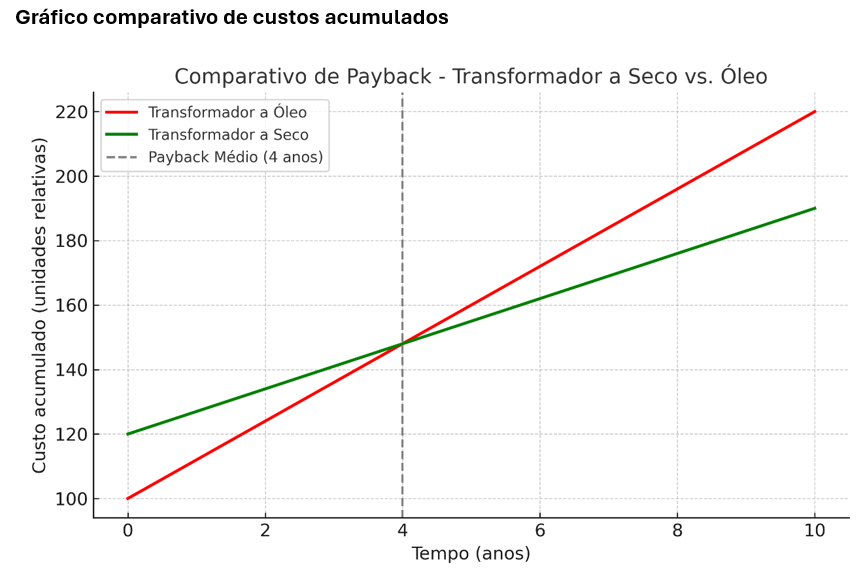
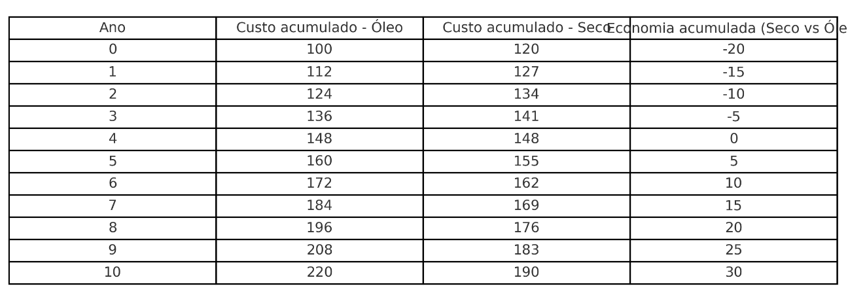
- A comparison of Realistic payback, with a graph and table showing how many years the investment will pay for itself.
What is a dry-type transformer?
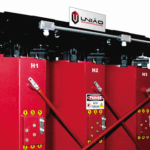
The dry transformer is equipment that uses Epoxy resin or special encapsulation as an insulator, eliminating the need for mineral oil. This technology eliminates leakage and fire risks, making it ideal for Indoor, urban, and high-criticality environments.
The oil-filled transformer, a more traditional model, uses insulating oil, which, while efficient, represents environmental and safety risk.
Main advantages of dry-type transformers
1. Fire safety
- Without oil = no risk of leaks or explosions.
- Meets rigorous requirements for electrical safety in hospitals, shopping malls, airports, and industries.
2. Sustainability and ESG
- It does not contaminate soil or water.
- Eliminate the need for containment basins.
- Reduce the project's carbon footprint.
Simplified Installation
- It can be installed indoors, closer to the load.
- Lower infrastructure costs (cables, protective areas, containment).
4. Lower maintenance
- Does not require physicochemical analysis of oil.
- Reduction of up to 40% in annual maintenance costs.
5. Technical compliance
- Serves ABNT NBR 5356-11:2016.
- Guarantee low electrical losses and greater energy efficiency.
- High reliability in harsh environments, including outdoors (IP54/IP55).
Payback: When do dry-type transformers start to generate profit?
It is common to hear that the dry transformer has a initial investment up to 20% higher than oil. But when we analyze the life cycle, the difference quickly disappears.
- Annual economy: up to 40% in maintenance and energy losses.
- Cheaper infrastructure: without containment basins and additional fire suppression systems.
- Return on Investment (Payback)on average 4 years.
Payback simulation table
The simulation shows year by year the accumulated cost of the oil-filled transformer versus the dry-type transformer. As of the 4th year, the dry-type transformer already generates Net economy, confirming their financial superiority.
Where to install the dry transformer?
- Hospitals and clinicsMaximum security for critical environments.
- Industriesreliable operation even in severe conditions.
- Data centersreliability and low energy loss.
- Renewable energy (solar, wind, BESS)alignment with sustainability.
- Urban centers and commercial buildingstake up less space and reduce risks.
Conclusion
O dry-type transformer it's more than a technological trend: it's a Strategic decision. He delivers.
- Best fire safety;
- Reduction of operational costs;
- Sustainability aligned with ESG;
- Payback in a few years;
- Compliance with national and international standards.
When choosing a dry transformer, your company is choosing a more sustainable future safe, efficient, and sustainable.
And when it comes to Security, quality, and reliability, the Dry transformers from Transformadores União represent the best choice. Our equipment is developed according to the most rigorous technical standards, ensuring High performance and long lifespan.
👉 Contact us and find out how União Transformers can offer the ideal solution for your project, uniting technology, quality, and commitment to sustainability.
 Português do Brasil
  English
  Español