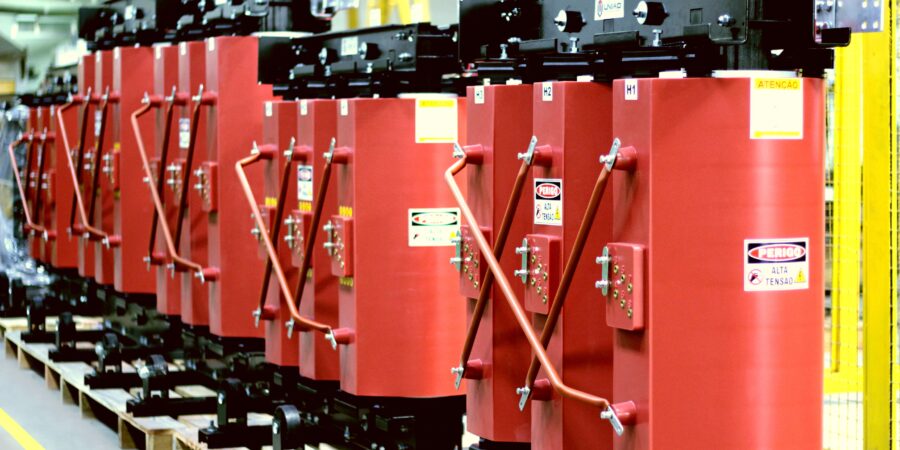
Dry-Type Transformers: Sustainable and Efficient Solutions for a Wide Range of Applications
Dry-type transformers are gaining prominence as an efficient and sustainable alternative to conventional transformers, especially in environments where the use of insulating oil can pose environmental and safety risks. In this article, we will explore everything you need to know about dry-type transformers, from their basic operation to their advantages and applications in various industrial sectors.
To begin, we explain the operating principle of dry-type transformers and how they differ from traditional transformers, highlighting their innovative technology that eliminates the need for insulating oil. Next, we emphasize the advantages of dry-type transformers, including a lower risk of leaks, increased operational safety, ease of maintenance, and environmental compliance.
We also explore the diverse applications of dry transformers in sectors such as industry, infrastructure, transportation, telecommunications, and renewable energy. Their versatility makes them an attractive choice for a variety of industrial needs, offering significant benefits in terms of safety, efficiency, and sustainability.
We further discuss how dry-type transformers can contribute to the energy efficiency of industrial facilities by reducing energy losses and improving the quality of the electrical supply. Finally, we address recent trends and innovations in the development of dry-type transformers, highlighting advances in insulating materials and more efficient cooling systems.
In summary, dry-type transformers offer an efficient, safe, and sustainable solution for a variety of industrial applications. By understanding their benefits and applications, companies can make informed decisions when selecting the most suitable type of transformer for their needs, thus contributing to the modernization and sustainability of their operations.


 Português do Brasil
  English
  Español