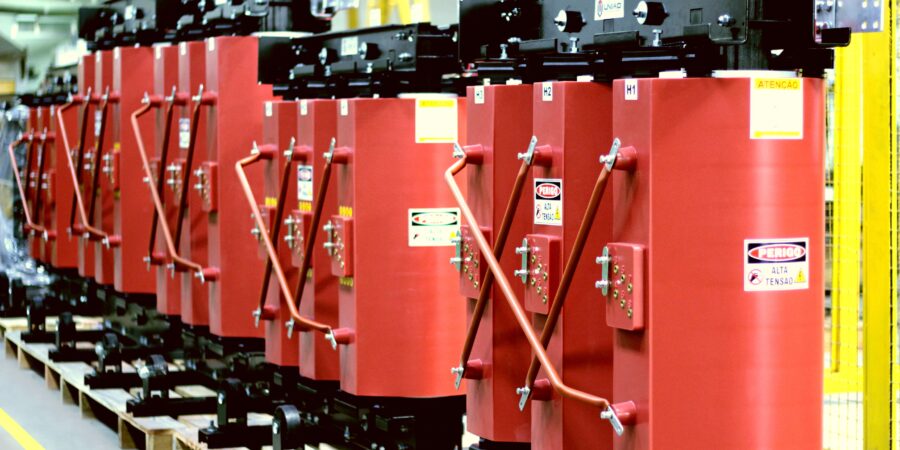
Quality Standards – The Foundation for Lasting Trust
In the industrial transformer industry, quality is more than a metric – it's the guarantee of reliable performance. This article explores the pillars of quality standards, from international certifications to rigorous quality controls, that ensure the production of transformers that exceed expectations.
1. International Certifications: Setting the Global Standard
Compliance with international certifications is an essential requirement for any high-quality transformer. Standards like ISO 9001 and ABNT 5356-11 establish the benchmarks for safety, performance, and efficiency, ensuring that products meet globally recognized requirements.
These certifications not only validate the quality of the product but also demonstrate the company's commitment to excellence. Customers and partners can trust that they are acquiring transformers that have undergone rigorous testing and meet the highest standards.
2. Quality Control: From Raw Material to Finished Product
Quality control is a journey that spans the entire transformer lifecycle. Starting with the careful selection of raw materials, through component production, to final assembly, each step is subjected to meticulous inspections and rigorous testing.
This holistic approach not only identifies potential failures but also ensures quality consistency. The result is a transformer that not only meets but exceeds performance and durability expectations.
3. Durability and Reliability: Transformers That Stand the Test of Time
Durability is a critical component of quality in industrial transformers. Designed to operate under harsh conditions, these devices are built to stand the test of time.
Durable materials, advanced insulation techniques, and precise manufacturing processes contribute to the creation of transformers that not only function but also thrive in challenging environments. This results in consistent performance over the years, minimizing the risk of unexpected failures.
 Português do Brasil
  English
  Español