Transformers in BESS Systems
Efficiency and Strategic Role in Energy Transition
With the growth of intermittent renewable generation, such as solar and wind, battery energy storage systems, known as BESS, have gained prominence in the stability and reliability of the electrical system. A BESS works by storing electrical energy — generally in lithium-ion batteries — so that it can be used later, during periods of higher demand or lower generation. This energy is stored in direct current (DC) and needs to be converted to alternating current (AC) before being integrated into the grid, which requires the use of inverters and, especially, transformers.
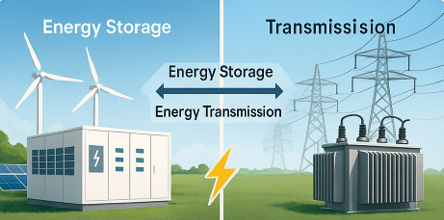
The transformer plays a crucial role in integrating the BESS with the power grid. It performs voltage level matching, stepping up the low voltage output from the inverter to the typical medium voltage levels required by utilities, in addition to providing electrical isolation, which is essential for protecting equipment and the grid. More than that, the transformer directly impacts the overall efficiency of the system, as its losses—both no-load (core) and under load (windings)—add to the losses of the electronic converters. In systems with constant charge and discharge cycles, high transformer efficiency is essential to ensure the technical and economic viability of the solution. Optimized designs include transformers specifically for power electronics applications, capable of better handling load variations and harmonic distortions.
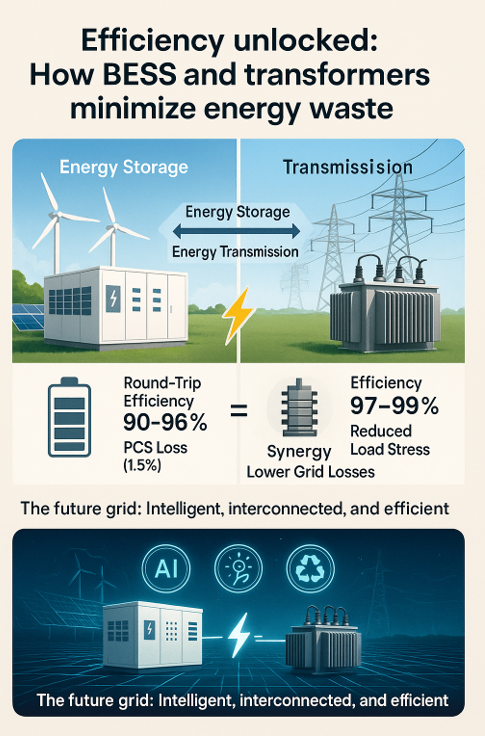
In conclusion, the proper selection and sizing of transformers in BESS (Battery Energy Storage Systems) go far beyond simple voltage matching. They directly influence the system's performance, durability, and operational costs. In an era of increasing electrification and decarbonization, investing in efficient transformers adapted for this type of application is a strategic decision to ensure energy efficiency and the reliability of modern grids.
Sources
IRENA - Innovation Outlook: Smart Charging for Electric Vehicles.
ABB Whitepaper: Transformers for Energy Storage Systems;
IEEE 1547-2018 – Standard for Distributed Energy Resources;
NREL – Battery Energy Storage Systems Performance Metrics;

 Português do Brasil
  English
  Español