Transformers and Autotransformers: Operation and Applications
Transformers are fundamental components in electrical systems, but perhaps you haven't heard much about autotransformers. Despite being less known than conventional transformers, they play an important role in various applications. In this article, we will explore how autotransformers work and where they are used effectively.
The Operation of an Autotransformer
An autotransformer is a special type of transformer that differs from conventional transformers due to its unique construction and operation. Instead of having two separate windings, an autotransformer has only one winding with two connections: the input point (input) and the output point (output).
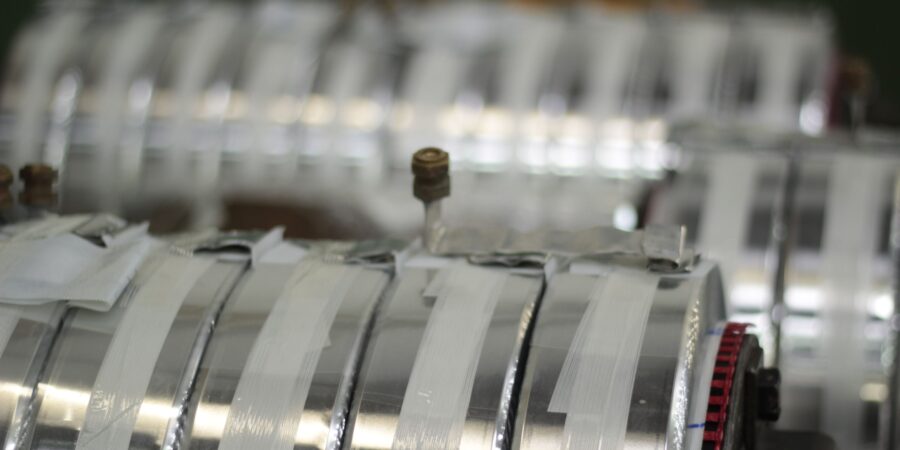
The basic operation of an autotransformer involves the transfer of energy from one coil to another through electromagnetic induction. The single winding is wrapped around an iron core, creating a path for magnetic flux. When an alternating voltage is applied to the input, it generates a changing magnetic field in the core, which in turn induces a voltage at the output.
The main difference between an autotransformer and a conventional transformer lies in the relationship between input and output voltages. In an autotransformer, the output voltage is a fraction of the input voltage. This happens because the input and output windings share part of the same wire, creating a direct electrical connection.
Applications of Autotransformers
Autotransformers have a variety of applications where their efficiency and cost-effectiveness are advantageous:
Voltage Control:
A common use of autotransformers is voltage control in electrical systems. They can adjust the output voltage to keep voltage levels within proper limits.
2. Voltage Conversion:
Autotransformers are used to convert voltages from foreign electrical systems to the local voltage. For example, in countries with different voltage standards, they can be used to allow imported appliances to operate correctly.
Advantages and Challenges of Autotransformers
Advantages:
Efficiency: Autotransformers tend to be more efficient than conventional transformers, as there are fewer energy losses due to lower winding resistance.
Compact Size: They are generally smaller and lighter than conventional transformers of equivalent capacity, saving space.
Lower Cost: In many cases, autotransformers are more economical than conventional transformers, making them an attractive choice in applications where the voltage ratio can be efficiently adjusted.
Challenges:
Lower Electrical Isolation: Due to the direct connection between input and output, autotransformers offer lower electrical isolation between windings. This can limit their application in some situations where isolation is critical.
Adequate Protection: It is important to implement appropriate protection devices to prevent overloads and short circuits, as an autotransformer may not have the same isolation capacity as a conventional transformer.
Conclusion
Autotransformers play a vital role in various applications, providing an efficient and cost-effective way to adjust electrical voltages. Their unique operation offers significant benefits in terms of size, efficiency, and cost. However, it is essential to understand their limitations and implement appropriate protection.

 Português do Brasil
  English
  Español