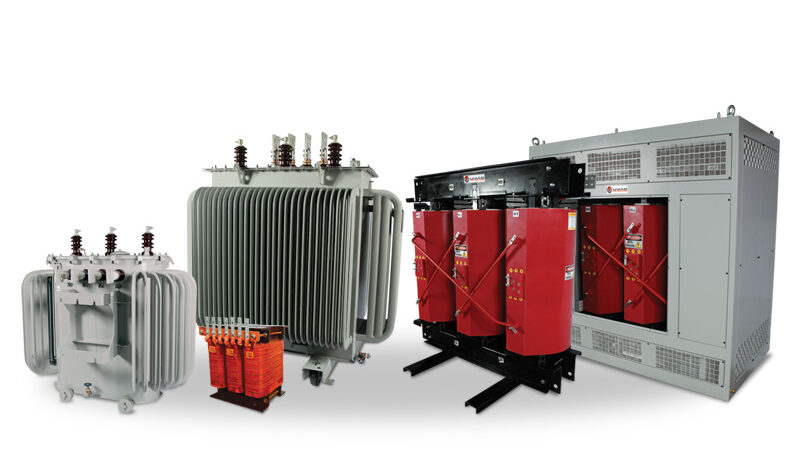
Dry-Type Transformers vs. Oil-Filled Transformers: A Detailed Comparison
In the electrical industry, the choice between dry-type transformers and oil-filled transformers is a crucial decision that affects the efficiency, safety, and reliability of an electrical installation. Both types of transformers have their specific advantages and challenges. In this article, we will conduct a detailed analysis comparing the benefits and challenges of dry-type transformers and oil-filled transformers.
Dry Transformers: Advantages and Challenges
Advantages of Dry-Type Transformers:
Safety: Dry-type transformers are known to be safer in terms of fire risk, as they do not use oil as an insulating medium.
Less Maintenance: They generally require less maintenance than oil-filled transformers, as there is no need to check or change the insulating fluid.
Environmentally Friendly: There is no risk of oil leakage, making them more environmentally friendly.
Lower Long-Term Cost: Although the initial cost may be higher, dry-type transformers can be more economical in the long run due to reduced maintenance expenses.
Challenges of Dry Transformers:
Lower Cooling Capacity: In some heavy-load situations, dry-type transformers may have a lower cooling capacity than oil-immersed transformers, which may require additional cooling solutions.
Size and Weight: Dry-type transformers tend to be larger and heavier than oil-filled transformers of equivalent capacity.
Oil Transformers: Advantages and Challenges
Advantages of Oil-Immersed Transformers:
High Cooling Capacity: Oil-filled transformers have effective cooling capabilities, allowing for continuous operation under heavy loads.
Smaller Size and Weight: Compared to dry-type transformers, oil-filled transformers are more compact and lighter for a given capacity.
Temporary Overload Resistance: Oil-filled transformers have a greater temporary overload capacity, making them suitable for applications with variable demands.
Challenges of Oil-Immersed Transformers:
Oil Leak Risk: Insulating oil may leak in case of failure, posing an environmental and fire hazard.
Maintenance Required: Oil-filled transformers require regular maintenance to check and change the oil, as well as to monitor the condition of insulating materials.
Waste Disposal Costs: The proper disposal of used oil can be expensive and regulated due to environmental concerns.
What is the Right Choice?
The choice between dry-type transformers and oil-filled transformers depends on the specific needs of an application. It is crucial to consider factors such as safety, initial costs, maintenance costs, energy efficiency, and environmental restrictions. In many cases, the trend has been to migrate to dry-type transformers due to their advantages in terms of safety and environmental impact. However, oil-filled transformers are still preferred in applications that require high cooling capacity and resistance to temporary overloads.
Ultimately, the choice should be made based on a careful evaluation of your electrical installation's needs, considering all the pros and cons of both transformer types. Consulting an electrical equipment specialist is always advisable to ensure the choice is the most suitable for your specific situation.

 Português do Brasil
  English
  Español