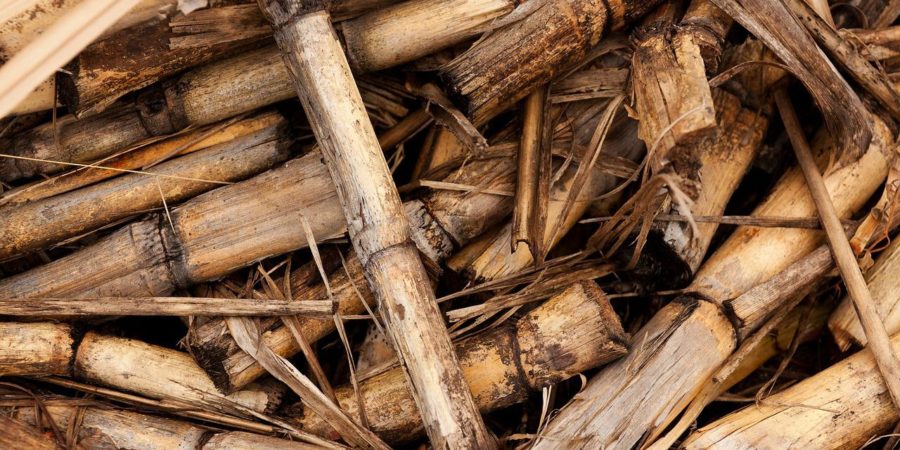
Biomass Power Generation: How Does It Work?
Together with the photovoltaic system, biomass is one of the renewable energy sources. Basically, it corresponds to all organic or plant matter, other than traditional fossil fuels—it can even be an alternative to this type of energy. Due to the diversity of raw materials (agricultural waste, food scraps, firewood, sugarcane bagasse, and even garbage), it has a low cost, but do you know what results this material can offer and how energy is generated through biomass?
Check out this content to learn how biomass energy is produced and what the results are from using this input.
Biomass energy generation typically involves combustion, gasification, or anaerobic digestion. In combustion, biomass is burned to produce heat, which then boils water to create steam. This steam drives a turbine connected to a generator, producing electricity. Gasification converts biomass into a synthesis gas (syngas) through a thermochemical process. Syngas, primarily composed of hydrogen and carbon monoxide, can then be used in gas turbines or internal combustion engines to generate electricity. Anaerobic digestion is a biological process where microorganisms break down organic matter in the absence of oxygen, producing biogas. Biogas, mainly methane and carbon dioxide, can be burned in an engine or turbine to generate electricity, or purified and used as a fuel for heating or cooking.
Some of the most common energies generated by biomass are thermal and electrical, however, it can also generate several other products, such as biodiesel and biogas. These variations are produced according to how the biomass is treated: combustion, co-combustion, pyrolysis, and gasification. Understand below how each of these processes works.
Combustion
Combustion is the most common type of biomass treatment. In this process, biomass undergoes high-temperature burning with a large presence of oxygen. This results in high-pressure steam, which is used to drive turbines and consequently generate electrical energy.
Co-combustion
Just like the previous one, this process also uses combustion, but in a different way. This method offers the possibility of replacing part of the mineral coal used in thermoelectric power plants with biomass. The result of this action is a reduction in the emission of pollutants from these plants.
Pyrolysis
In pyrolysis, biomass also undergoes a high-temperature process with a low presence of oxygen, which accelerates the decomposition process. Because of this factor, the products of this action are different from the preceding one; instead of vapor, we have liquids (like bio-oil) and solids such as charcoal..
Gasification
As the name suggests, this method aims to obtain only biogas that can be used in boilers (for electricity production) and vehicles, for example. To achieve this, biomass is burned, but at a lower temperature, thus producing only flammable gas.
For all the processes mentioned above, transformers are necessary to step down or step up voltage levels as per the user's needs.


 Português do Brasil
  English
  Español